
How to Start a Food Business Legally: Licenses, Safety Rules and Compliance Checklist
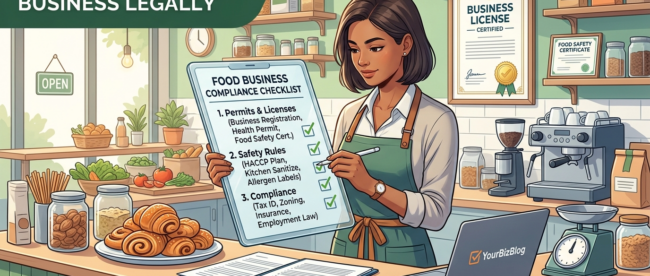 A checklist of permits and safety requirements to start a food business legally
To start a food business legally you need to do more than just have a recipe or customers wanting your food. You must get permits, follow food safety rules, register your business correctly and obey health regulations before serving customers.
Whether you are planning a home-based bakery, food cart, catering service, cloud kitchen or restaurant this guide explains what you need to do to comply with the law and how to do it efficiently.
Let’s go through the foundation that every successful food business builds first.
Choose the Right Business Structure First
Your business structure affects your taxes, protection from liability and what licenses you need.
Common options are:
- Sole proprietorship (simplest to start)
- Partnership (shared ownership)
- Corporation or LLC-type structure (protection from liability)
Many people start small, then change later as their business grows. If you are planning to expand, choosing an entity early makes it easier to comply with the law.
Register Your Food Business Name
Before you can operate legally you must register your business name with the government.
This step lets you:
- Open a business bank account
- Issue receipts
- Sign agreements with suppliers
- Build a brand
Choose a name that reflects what you do and can grow with your business—not just your current menu.
Secure a Business Permit or License
One of the most important steps to start a food business legally is getting a local business permit.
Usually issued by your city office or municipal authority, this permit confirms:
- You are allowed to operate in your area
- Your business location meets zoning rules
- Your operations follow city guidelines
Without this permit your business can be fined or closed immediately.
Obtain Food Safety Certification
Food safety certification protects both your customers and your reputation.
Most places require:
- Food handler certification
- Sanitation training
- Kitchen hygiene approval
These programs teach:
- Safe storage temperatures
- How to prevent cross-contamination
- Personal hygiene requirements
- Equipment sanitation procedures
Food safety training is not only about compliance—it protects your business from risks.
Pass the Health Inspection Requirements
Before opening, your kitchen must pass a health inspection.
Inspectors usually check:
- Cleanliness of preparation areas
- Waste disposal systems
- Ventilation quality
- Water supply safety
- Pest control procedures
- Storage separation (raw vs cooked foods)
Passing inspection confirms that your workspace meets food safety standards.
Register With Tax Authorities
To start a food business legally you must register with your regional tax agency.
This allows you to:
- Issue receipts
- Pay business taxes correctly
- Buy supplies as a registered entity
- Avoid compliance penalties
Proper tax registration also increases credibility with suppliers and delivery platforms.
Secure Fire and Safety Clearance
Food businesses often use:
- Gas equipment
- Appliances
- Commercial cooking tools
Because of this, fire safety clearance is usually required.
Authorities check:
- Fire extinguisher availability
- Emergency exits
- Ventilation safety
- Electrical wiring compliance
Even small food carts may require safety clearance depending on local regulations.
Follow Labeling Requirements for Packaged Food
If you sell packaged products like:
- Baked goods
- Bottled sauces
- Prepared meals
- Snacks
You must follow proper labeling rules.
Typical labeling requirements include:
- Product name
- Ingredient list
- Expiration date
- Manufacturer information
- Allergen warnings
Proper labeling helps customers make informed decisions and protects your business legally.
Understand Zoning Rules for Home-Based Food Businesses
Many entrepreneurs begin from home kitchens. However zoning rules vary depending on your location.
Some areas allow:
- Baking businesses
- Catering preparation
- Prepacked food production
Others restrict:
- Heavy cooking equipment
- Customer pickups
- Large-scale operations
Before launching from home, verify local zoning compliance.
Open a Dedicated Business Bank Account
Separating business finances is essential when you start a food business legally.
This helps you:
- Track expenses accurately
- File taxes properly
- Build credibility
- Apply for loans later
It also makes scaling easier when expanding into delivery partnerships or supplier contracts.
Food Business Compliance Checklist
Here’s a checklist you can follow before opening:
- Register business name
- Secure municipal business permit
- Obtain food safety certification
- Pass health inspection
- Register with tax authority
- Acquire fire safety clearance
- Verify zoning compliance
- Follow labeling regulations
- Open business bank account
- Prepare sanitation procedures documentation
Completing this checklist ensures your business launches with confidence and legitimacy.
Avoid These Common Legal Mistakes Beginners Make
Many first-time food entrepreneurs unintentionally delay their launch by skipping steps.
Typical mistakes include:
- Operating before securing permits
- Ignoring labeling requirements
- Using unapproved kitchens
- Mixing business finances
- Skipping sanitation documentation
Planning carefully avoids penalties and protects your investment.
When to Apply for Additional Certifications
As your food business grows you may need:
- Export certifications
- Halal certification (if applicable)
- Organic labeling approvals
- Commercial kitchen licensing upgrades
- Delivery platform registration requirements
Planning ahead makes expansion smoother and faster.
Final Thoughts
Learning how to start a food business legally is one of the most important investments you can make as a food entrepreneur.
Legal compliance builds:
- Trust with customers
- Stability for long-term growth
- Protection against shutdown risks
- Credibility with partners and suppliers
Instead of treating licensing as a barrier, think of it as the foundation that supports your success.
With the permits, safety practices and documentation in place your food business can launch confidently and scale sustainably.
Leave a comment