
Food Business Legal Requirements: Permits, Liability Risks and Compliance Laws Explained
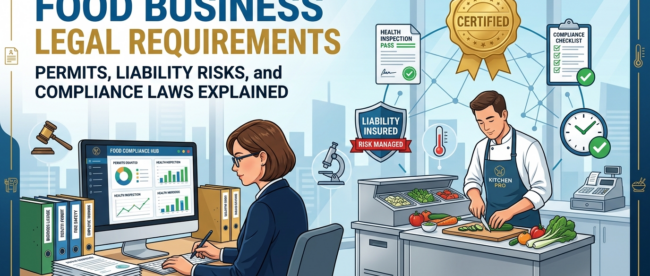 Essential permits and compliance laws every food business owner should understand.
Starting a food business is exciting. Understanding the legal requirements is what makes your business sustainable and compliant. Whether you are opening a home-based food brand, launching a kitchen or planning a restaurant, legal preparation protects your investment, customers and reputation.
Many new entrepreneurs focus on recipes, branding and marketing first. However permits, liability protections and compliance laws are essential to keep operations running and avoid costly penalties later.
This guide explains the permits, major liability risks and compliance obligations every food entrepreneur should understand before launching.
Understanding Food Business Legal Requirements Before You Launch
Food businesses have more regulations than most industries because they directly affect public health. Governments require compliance with licensing, sanitation standards, labeling rules and safety inspections.
Here are core legal requirements:
- Business registration
- Food safety permits
- Health inspections
- Sanitation compliance
- Product labeling rules
- Employee health certifications
- Liability protections
Skipping even one requirement can delay opening or result in shutdown notices.
If you are building a startup roadmap, reviewing these basics alongside how to start a small business helps ensure your foundation is solid from day one.
Business Registration Comes First
Before applying for food permits your business must legally exist as a recognized entity.
Common structures include:
- Sole proprietorship
- Partnership
- Limited liability company (LLC)
- Corporation
Each structure affects taxes, liability exposure, ownership flexibility and long-term growth options.
Many small food entrepreneurs choose an LLC because it separates business liabilities. This protection is critical when dealing with customer health risks.
Registering your business name and securing tax identification numbers are typically the first formal compliance steps.
Essential Permits Required for Food Businesses
Securing permits is one of the most important parts of food business legal compliance. These vary by location but usually include several core approvals.
Health Department Permit
This confirms your kitchen meets sanitation and food-handling standards.
Inspectors typically evaluate:
- Storage conditions
- Refrigeration systems
- Food preparation surfaces
- Cleaning procedures
- Waste disposal systems
Without approval most food businesses cannot legally operate.
Food Safety Certification
Many jurisdictions require food handlers to complete safety training before working with ingredients or preparing meals.
Certification programs teach:
- Contamination prevention
- Safe cooking temperatures
- Storage procedures
- Cross-contact avoidance
This protects both customers and your business reputation.
Business License
A general business license allows your operation to legally function within your municipality.
It ensures compliance with:
- Zoning rules
- Local taxation
- Operating classifications
This permit is often renewed annually.
Home Kitchen or Cottage Food Permit
If you are launching a home-based food brand you may qualify under cottage food regulations.
These rules typically allow:
- Baked goods
- Packaged snacks
- Shelf-stable products
However they often restrict:
- Meat preparation
- Dairy processing
- Hot food delivery
Always confirm eligibility before selling from home.
Food Labeling Compliance Requirements
Labeling mistakes are one of the most common compliance violations among new food entrepreneurs.
Proper labeling generally includes:
- Product name
- Ingredient list
- Allergen warnings
- Expiration details
- Net weight
- Manufacturer information
Clear labeling protects consumers and reduces legal risk.
Liability Risks Every Food Business Owner Should Understand
Legal compliance is not only about permits. It is also about protecting your business against risks.
Major liability areas include:
- Foodborne illness claims
- Allergen exposure risks
- Employee safety violations
- Supplier compliance failures
Insurance Coverage That Protects Food Businesses
Insurance is not always legally required, but it is strongly recommended as part of food business legal planning.
Common coverage types include:
- General liability insurance
- Product liability insurance
- Workers’ compensation insurance
Kitchen Compliance and Sanitation Laws
Food safety regulations are strict because they protect public health.
Most kitchens must follow:
- Temperature control standards
- Sanitation schedules
- Pest control procedures
- Safe storage systems
- Cleaning documentation logs
Health inspections often occur before opening and periodically afterward.
Local Zoning Laws Can Affect Your Location Choice
Many entrepreneurs overlook zoning restrictions when selecting a kitchen space.
Local zoning determines whether your business can legally operate in:
- Residential areas
- Commercial zones
- Shared kitchens
- Mobile food units
Operating in the wrong zone can prevent your business from opening.
Employee Compliance Requirements for Food Businesses
Hiring staff introduces additional legal responsibilities.
Typical requirements include:
- Employment registration
- Health certifications
- Payroll tax reporting
- Workplace safety compliance
- Labor law adherence
Digital Compliance for Online Food Sellers
Selling food online introduces additional responsibilities beyond traditional storefront regulations.
Online sellers must consider:
- Delivery safety procedures
- Packaging integrity
- Customer data protection
- Digital payment compliance
- Marketplace platform rules
Steps to Stay Compliant Long Term
Meeting food business legal requirements once is not enough. Compliance is ongoing.
Smart operators create systems that include:
- Permit renewal tracking
- Inspection readiness routines
- Supplier verification logs
- Staff certification updates
- Labeling accuracy checks
Final Thoughts
Understanding food business legal requirements is one of the most important investments a food entrepreneur can make. While recipes attract customers, following the steps to open a compliant food business protects your ability to serve them consistently and safely.
From permits and labeling rules to insurance coverage and sanitation standards, each legal step strengthens your business foundation. Entrepreneurs who prioritize compliance early build stronger brands, avoid costly penalties and create safer experiences for customers.
Treat preparation not as a hurdle but as a growth strategy that supports long-term success.
Leave a comment