
Food Safety Standards Every Small Food Business Must Follow to Avoid Violations
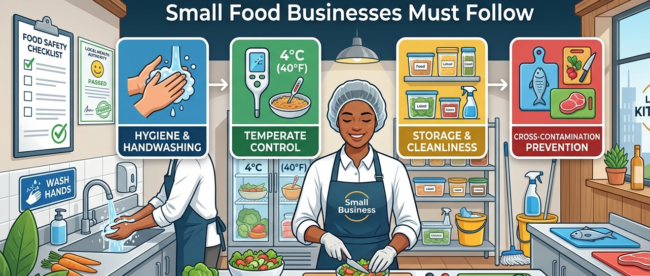 Essential food safety practices help small food businesses prevent violations and protect customers.
Food Safety Standards Every Small Food Business Must Follow are essential for protecting customers and maintaining a strong business reputation. If you run a food business such as a café, cloud kitchen, catering service or restaurant, following these rules helps keep both your customers and your operations safe. If you are currently researching how to legally start a food business, understanding these standards is a critical first step. If these standards are ignored, businesses may face penalties or even temporary closure.
If these standards are ignored, businesses may face penalties or even temporary closure. The good news is that most violations can be avoided by putting the right systems in place.
This guide walks you through the most important food safety standards every small food business must follow.
Proper Personal Hygiene Practices in the Kitchen
One major cause of food contamination is poor personal hygiene. Health inspectors often observe staff behavior before reviewing equipment or storage conditions.
Small food businesses should ensure their staff always:
- Wash their hands frequently and properly
- Wear uniforms or aprons
- Keep their hair tied back
- Avoid wearing jewelry during food preparation
- Cover any cuts or wounds
- Wear gloves when required
Regular staff training helps build consistent hygiene habits across the kitchen.
You can also explore newer monitoring solutions discussed in the article about AI-powered food safety tools.
Safe Food Storage Temperature Control
Improper storage temperature can make food unsafe for consumption. Temperature control is one of the most important food safety standards every small food business must follow.
Key temperature guidelines include:
- Cold food: below 5°C (41°F)
- Hot food: above 60°C (140°F)
- Frozen food: −18°C (0°F) or lower
Helpful best practices include:
- Using thermometers daily
- Checking refrigerators twice per day
- Recording temperature logs
- Avoiding refrigerator overloading
- Separating cooked food from raw food
Maintaining temperature logs can help prevent safety violations.
Preventing Cross-Contamination During Preparation
Cross-contamination occurs when harmful bacteria transfer between ingredients or surfaces during food preparation.
Prevent this by:
- Using color-coded cutting boards
- Separating preparation areas
- Cleaning knives after each use
- Storing raw meat below cooked food
- Sanitizing workstations between tasks
You can learn more workflow solutions in the article about digital kitchen management systems.
Approved Cleaning and Sanitizing Procedures
Cleaning removes visible dirt while sanitizing removes invisible bacteria. Inspectors expect businesses to maintain both processes consistently.
Your kitchen should have:
- A documented cleaning schedule
- Properly labeled cleaning products
- Correct sanitizer concentrations
- Separate cloths for surfaces and floors
- Soap available for handwashing
A strong cleaning routine should include:
- Daily cleaning tasks
- End-of-shift sanitation routines
- Weekly deep cleaning
- Monthly equipment inspections
Posting cleaning schedules visibly increases staff compliance.
Employee Food Safety Training Requirements
Even experienced staff need structured training to maintain safety standards.
Your training program should include:
- Safe cooking procedures
- Proper food storage practices
- Food allergy awareness
- Correct sanitation methods
- Illness reporting procedures
Assigning a safety supervisor helps maintain accountability across the team.
For global food safety guidance, you can review recommendations from the World Health Organization.
Reliable Supplier and Ingredient Verification
Food safety begins before ingredients enter your kitchen.
Always confirm suppliers provide:
- Valid operating licenses
- Correct delivery temperatures
- Undamaged packaging
- Products within expiration dates
- Traceability documentation
Keeping supplier records organized helps reduce compliance risks.
Accurate Food Labeling and Allergen Awareness
Incorrect labeling can create serious health risks for customers, especially those with allergies.
Clearly label common allergens such as:
- Milk
- Eggs
- Nuts
- Soy
- Wheat
- Seafood
Transparent labeling improves customer trust and safety.
Pest Control and Kitchen Environment Safety
Pests in food preparation areas create contamination risks and inspection failures.
Prevent pest problems by:
- Sealing wall openings
- Installing door sweeps
- Managing waste properly
- Storing ingredients in sealed containers
- Scheduling regular pest inspections
Technology solutions are also discussed in the article about smart restaurant technology trends.
Documentation That Protects Your Business During Inspections
Inspectors expect organized documentation that proves consistent safety practices.
Maintain records for:
- Refrigerator temperature logs
- Cleaning schedules
- Staff training attendance
- Supplier delivery tracking
- Equipment maintenance checks
Proper documentation improves inspection outcomes.
Waste Handling and Disposal Compliance
Poor waste handling increases contamination risks and attracts pests.
Best practices include:
- Using sealed waste containers
- Separating food waste from packaging
- Emptying trash frequently
- Keeping waste away from preparation areas
- Maintaining clean disposal zones outside
Proper waste management improves safety and kitchen efficiency.
Preparing for Surprise Health Inspections
Health inspections may occur without warning. The best preparation strategy is maintaining compliance daily.
Preparation tips include:
- Conduct monthly internal safety audits
- Review compliance checklists weekly
- Check temperature logs daily
- Clarify staff responsibilities
- Encourage accountability across teams
Many successful businesses treat inspections as part of routine operations rather than disruptions.
You can review inspection preparation guidance from the U.S. Food & Drug Administration.
Building a Safety-First Culture Inside Your Food Business
Creating a safety-first culture strengthens compliance and long-term business performance.
Encourage:
- Staff reporting of safety concerns
- Regular training sessions
- Visible cleaning schedules
- Leadership involvement in safety practices
- Routine safety procedure reviews
Following the Food Safety Standards Every Small Food Business Must Follow protects customers and strengthens your business reputation. A strong food safety record can also become a powerful marketing advantage.
Leave a comment