
Dehumidifier Pints Per Day: Easy Guide
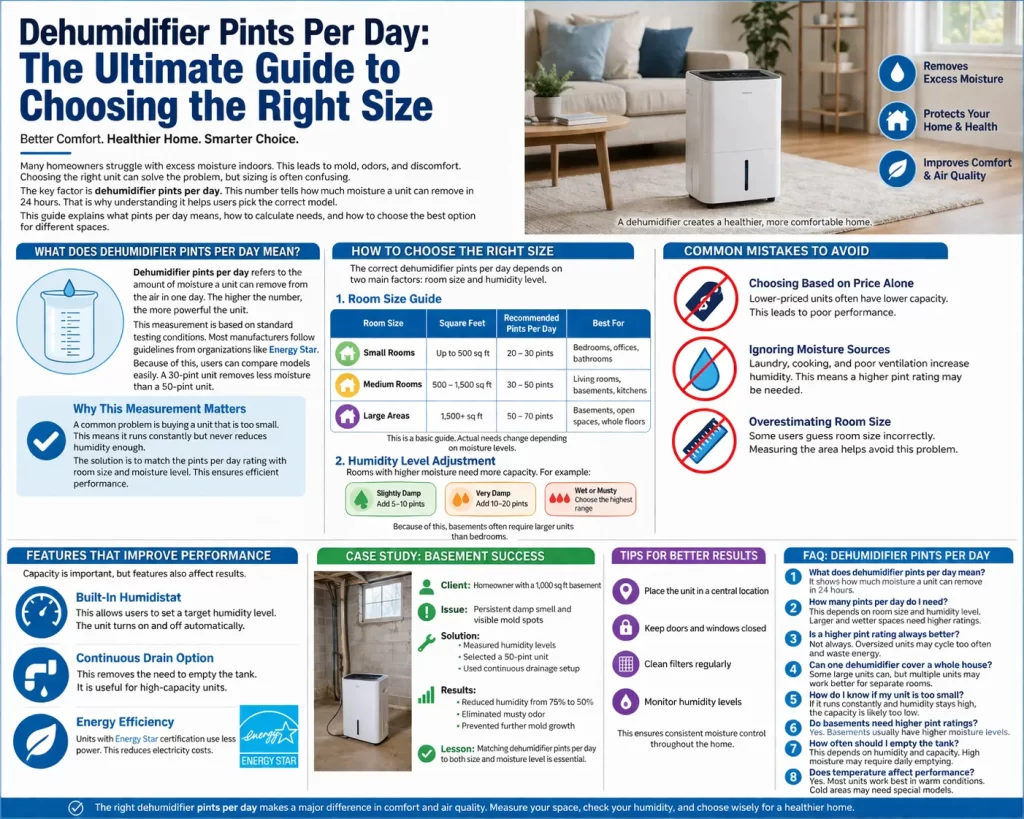
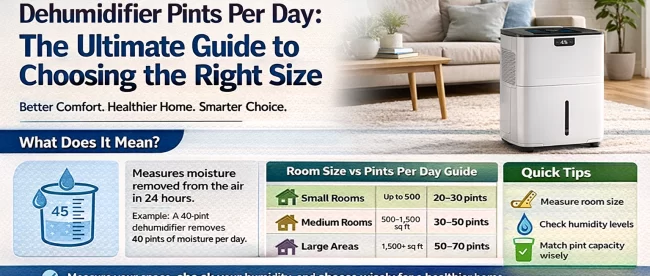 Infographic showing how to choose the right dehumidifier size based on pints per day, room size, and humidity levels.
Many homeowners struggle with excess moisture indoors. This leads to mold, odors, and discomfort. Choosing the right unit can solve the problem, but sizing is often confusing.
The key factor is dehumidifier pints per day. This number tells how much moisture a unit can remove in 24 hours. That is why understanding it helps users pick the correct model.
This guide explains what pints per day means, how to calculate needs, and how to choose the best option for different spaces.
What Does Dehumidifier Pints Per Day Mean?
Dehumidifier pints per day refers to the amount of moisture a unit can remove from the air in one day. The higher the number, the more powerful the unit.
This measurement is based on standard testing conditions. Most manufacturers follow guidelines from organizations like Energy Star.
Because of this, users can compare models easily. A 30-pint unit removes less moisture than a 50-pint unit.
Why This Measurement Matters
A common problem is buying a unit that is too small. This means it runs constantly but never reduces humidity enough.
The solution is to match the pints per day rating with room size and moisture level. This ensures efficient performance.
How to Choose the Right Size
The correct dehumidifier pints per day depends on two main factors: room size and humidity level.
Room Size Guide
- Small rooms (up to 500 sq ft): 20–30 pints
- Medium rooms (500–1,500 sq ft): 30–50 pints
- Large areas (1,500+ sq ft): 50–70 pints
This is a basic guide. Actual needs change depending on moisture levels.
Humidity Level Adjustment
Rooms with higher moisture need more capacity. For example:
- Slightly damp: Add 5–10 pints
- Very damp: Add 10–20 pints
- Wet or musty: Choose the highest range
Because of this, basements often require larger units than bedrooms.
Common Mistakes When Choosing a Dehumidifier
Many users make simple mistakes that reduce effectiveness.
Choosing Based on Price Alone
Lower-priced units often have lower capacity. This leads to poor performance.
Ignoring Moisture Sources
Laundry, cooking, and poor ventilation increase humidity. This means a higher pint rating may be needed.
Moisture control works best when combined with proper outdoor maintenance, including regular trimming and yard care—explore these expert tree service and lawn care tips.
Overestimating Room Size
Some users guess room size incorrectly. Measuring the area helps avoid this problem.
Features That Improve Performance
Capacity is important, but features also affect results.
Built-In Humidistat
This allows users to set a target humidity level. The unit turns on and off automatically.
Continuous Drain Option
This removes the need to empty the tank. It is useful for high-capacity units.
Energy Efficiency
Units with Energy Star certification use less power. This reduces electricity costs.
The Ultimate Guide to Choosing the right size
Case Study: Choosing the Right Size for a Basement
Client: Homeowner with a 1,000 sq ft basement
Issue: Persistent damp smell and visible mold spots
Solution:
- Measured humidity levels
- Selected a 50-pint unit
- Used continuous drainage setup
Results:
- Reduced humidity from 75% to 50%
- Eliminated musty odor
- Prevented further mold growth
Lesson: Matching dehumidifier pints per day to both size and moisture level is essential.
Tips for Better Results
Using the right unit is only part of the solution. Proper use improves performance.
- Place the unit in a central location
- Keep doors and windows closed
- Clean filters regularly
- Monitor humidity levels
This ensures consistent moisture control throughout the home.
FAQ: Dehumidifier Pints Per Day
What does dehumidifier pints per day mean?
It shows how much moisture a unit can remove in 24 hours.
How many pints per day do I need?
This depends on room size and humidity level. Larger and wetter spaces need higher ratings.
Is a higher pint rating always better?
Not always. Oversized units may cycle too often and waste energy.
Can one dehumidifier cover a whole house?
Some large units can, but multiple units may work better for separate rooms.
How do I know if my unit is too small?
If it runs constantly and humidity stays high, the capacity is likely too low.
Do basements need higher pint ratings?
Yes. Basements usually have higher moisture levels.
How often should I empty the tank?
This depends on humidity and capacity. High moisture may require daily emptying.
Does temperature affect performance?
Yes. Most units work best in warm conditions. Cold areas may need special models.
Choosing the correct dehumidifier pints per day makes a major difference in comfort and air quality. The right size removes moisture efficiently without wasting energy.
Homeowners should measure space, assess humidity, and match capacity carefully. This leads to better performance and long-term results.




Leave a comment