
Summer Skincare 2026: 10 Smart Tips for Healthy Skin
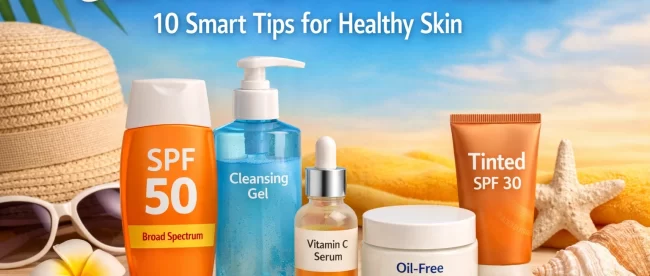 A simple summer skincare routine built for sun, sweat, and humidity.
Summer skincare 2026 is less about chasing a 12-step routine and more about protecting your skin from heat, sweat, UV exposure, and seasonal irritation without overloading it. This year’s smartest approach is practical: wear a broad-spectrum sunscreen, keep hydration lightweight, use non-comedogenic formulas, and adjust your routine to match humidity, outdoor time, and how your skin actually behaves in summer. Dermatology guidance still centers on broad-spectrum SPF 30 or higher, water resistance, and reapplying at least every two hours, especially after swimming or sweating.
The mistake many people make in summer is assuming lighter means better for everything. In reality, your skin still needs cleansing, hydration, barrier support, and consistency. What changes is the texture of your products, how often you reapply sunscreen, and how carefully you manage sweat, clogged pores, and dark spots. If your current routine feels heavy, greasy, or irritating by midday, summer is the right time to simplify it.
Build your summer skincare 2026 routine around sunscreen
If there is one non-negotiable in summer skincare 2026, it is sunscreen. The American Academy of Dermatology recommends choosing a sunscreen that is broad-spectrum, water resistant, and SPF 30 or higher. The FDA also says broad-spectrum SPF should be used regularly and reapplied at least every two hours, with more frequent application when swimming or sweating.
That means your best summer sunscreen is not just the one with the highest number on the label. It is the one you will actually wear every day, in the right amount, and reapply when needed. For daily use, many people do well with lightweight lotions, gels, or fluid sunscreens. For pool days, beach trips, sports, or long walks, water resistance matters more.
A good rule is to pair sunscreen with other protection. Shade, hats, sunglasses, and UPF clothing all help reduce the total UV load on your skin, and no sunscreen blocks 100 percent of UV rays.
Choose lighter hydration, not no hydration
Hot weather can make moisturizers feel optional, but skipping them entirely often backfires. Air-conditioning, sun exposure, cleansing, and acne treatments can all leave skin dehydrated even when it looks shiny. The fix is not a richer cream. It is a lighter texture.
For most people, summer is the season for gel creams, lightweight lotions, and fragrance-free moisturizers that sit well under sunscreen. If you are oily or acne-prone, look for labels like “oil free” and “noncomedogenic,” which the AAD recommends because they are less likely to clog pores.
This is also where routine restraint helps. A cleanser, moisturizer, and sunscreen may be enough in the morning. At night, you can add one treatment product based on your biggest issue, whether that is acne, dullness, or post-sun dryness. Keeping things simple lowers the odds of irritation during the hottest months.
Summer skincare 2026 for oily and acne-prone skin
Summer often means more sweat, more oil, and more breakouts. The AAD notes that when sweat mixes with bacteria and oils on your skin, pores can clog more easily, which can trigger acne flare-ups.
That does not mean you should scrub your face harder. In fact, dermatologist guidance is the opposite. Gently wash your face up to twice daily and after sweating, using a non-abrasive cleanser and your fingertips rather than rough tools or aggressive exfoliation.
For acne-prone summer skin, a smarter routine looks like this:
- Use a gentle cleanser morning and night
- Cleanse after workouts
- Choose noncomedogenic moisturizer and sunscreen
- Consider salicylic acid if clogged pores are a recurring issue
- Avoid heavy occlusive products unless your skin is very dry
Salicylic acid remains a useful option because it helps unclog pores and exfoliate the skin, but it should be introduced carefully if your skin gets irritated easily.
A useful companion read here is best skincare routine for oily skin, especially if your T-zone gets noticeably slick by noon in warm weather.
Protect against dark spots and uneven tone
One of the biggest summer skincare 2026 concerns is hyperpigmentation. Sun exposure can deepen post-acne marks, melasma, and uneven tone, especially in people prone to discoloration. For that reason, tinted sunscreen has become especially important. The AAD notes that tinted sunscreens with iron oxide help protect against visible light, which can worsen dark spots.
This matters because regular sunscreen protects against UVA and UVB, but tinted formulas can add protection against visible light exposure too. If dark marks are your main concern, switching to a tinted SPF 30+ formula can be a smart summer upgrade.
You can also support that effort by keeping the rest of your routine calm. Too many acids, harsh scrubs, or overly strong actives can inflame the skin and make discoloration harder to manage. A more even complexion usually comes from consistency, not intensity.
For readers focused on tone and texture, how to fade dark spots safely would fit naturally into this conversation.
Avoid the most common summer skin mistakes
Summer skin problems are often caused by habits, not just weather. Dermatologists warn that heat, humidity, friction, and prolonged moisture can contribute to acne, rashes, folliculitis, and other irritations. Wearing tight clothing in hot, humid conditions can also aggravate hair follicles and trigger folliculitis.
The most common mistakes include:
Over-cleansing
More sweat does not mean you need to wash your face five times a day. Too much cleansing can strip the skin and push it toward more irritation.
Skipping reapplication
Morning sunscreen is not enough for a full day outdoors. Reapplying every two hours is still the standard advice, and immediately after swimming or heavy sweating is even better.
Using winter textures in peak humidity
Heavy creams and rich layers can feel suffocating in midsummer. This is often the season to swap dense products for lighter versions.
Forgetting body care
Your face is not the only skin that needs attention. Shoulders, chest, hands, scalp line, and legs often get neglected, especially on casual outdoor days.
Treating every breakout with stronger actives
Sometimes the better fix is showering after workouts, changing out of sweaty clothes quickly, and choosing lighter products rather than adding another harsh treatment.
A useful seasonal companion piece would be summer self-care habits that actually help for readers trying to match skin health with broader warm-weather habits.
Skincare also works better when it is part of a healthier routine, so it makes sense to explore simple ways to improve mental well-being alongside your summer self-care habits.
What’s new in summer skincare 2026?
From a regulation and formulation perspective, one notable development heading into 2026 is the FDA’s December 11, 2025 proposal to add bemotrizinol as a permitted sunscreen active ingredient if finalized. The agency said the ingredient provides protection against both UVA and UVB rays and has low skin absorption with rare irritation in the reviewed data. As of now, though, this is a proposal, not a finalized change, so shoppers should focus on current label basics: broad-spectrum coverage, SPF, water resistance, and reliable daily use.
In practical terms, summer skincare 2026 is moving toward better textures, more wearable sunscreen formats, and routines that respect the skin barrier. The winning trend is not doing more. It is doing the right few things consistently.
A simple morning and night routine for summer
Here is a realistic structure most people can follow.
Morning
Use a gentle cleanser if you wake up oily or sweaty. Apply a lightweight moisturizer if your skin needs it. Finish with broad-spectrum, water-resistant SPF 30 or higher. If you deal with hyperpigmentation, consider a tinted sunscreen with iron oxide.
Night
Cleanse away sunscreen, sweat, and buildup. Apply one treatment product if needed, such as salicylic acid for clogged pores. Seal it in with a light moisturizer to support the barrier.
This is also a good place to connect readers to how to build a simple skincare routine, since many people benefit more from routine clarity than from more products.
Final thoughts
The best summer skincare 2026 routine is one you can maintain in real life. That means sunscreen you will actually reapply, hydration that does not feel heavy, cleansing that is gentle instead of aggressive, and seasonal adjustments that match heat and humidity without wrecking your skin barrier.
Summer skin does not need a dramatic reset. It needs consistency, protection, and a little editing. When in doubt, simplify first. The strongest summer glow still starts with healthy skin, not a crowded shelf.
FAQ
What is the best summer skincare 2026 routine?
A simple routine works best for most people: gentle cleanser, lightweight moisturizer, and broad-spectrum SPF 30 or higher in the morning, then cleansing and light hydration at night. Reapply sunscreen every two hours when outdoors.
Do I still need moisturizer in summer?
Yes. Summer skin can still become dehydrated from sun, air-conditioning, and cleansing. The better move is switching to a lightweight, noncomedogenic moisturizer rather than skipping moisturizer altogether.
Is SPF 50 better than SPF 30 for summer?
Both can be useful, but the most important point is choosing broad-spectrum sunscreen and applying enough of it consistently. Dermatologists recommend SPF 30 or higher, plus reapplication and other sun-protective habits.
How do I prevent summer breakouts?
Cleanse gently up to twice daily and after sweating, avoid heavy pore-clogging products, shower after workouts, and use noncomedogenic formulas. Salicylic acid may help with clogged pores if your skin tolerates it.
Is tinted sunscreen worth it in summer?
Yes, especially if you are prone to dark spots or melasma. Tinted sunscreens with iron oxide can help protect against visible light, which can worsen pigmentation.


Leave a comment